

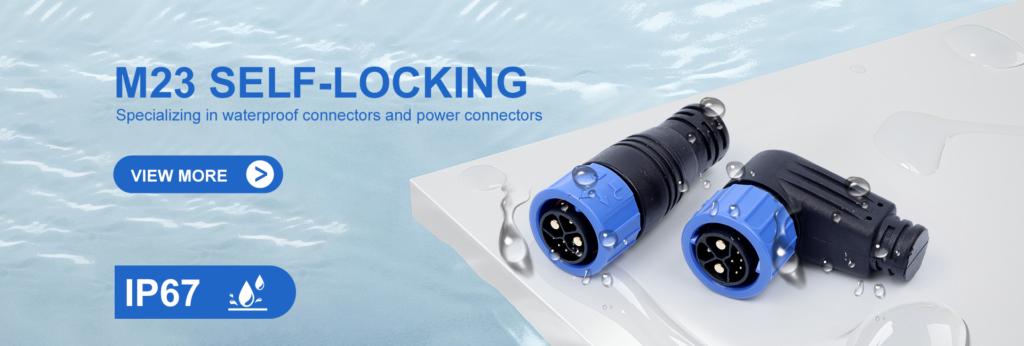
Outdoor electronic equipment faces far harsher working conditions than indoor products. Rain, dew, dust, temperature fluctuation, ultraviolet radiation and occasional mechanical impact are common threats. A poorly matched connector plug and socket will cause signal interruption, power failure, corrosion and even safety hazards. Choosing suitable outdoor connector plugs and sockets is a core step to guarantee the long-term stable operation of lighting, monitoring, solar, sensor and other field devices.
Start your selection from the protection rating first, which is the most basic indicator for outdoor use. The IP rating defines the ability to resist solid dust and water ingress. For general outdoor scenarios such as landscape lights and ordinary signage, IP67 is the mainstream choice. It means the connector is fully dust-tight and can withstand temporary immersion in shallow water for a limited time. For equipment that is often exposed to heavy rain, splashing waves or even continuous underwater use, you need to upgrade to IP68 rated plugs and sockets. Keep in mind that the IP rating applies to the complete mated pair of plug and socket. A high-rated plug paired with a low-grade socket cannot reach the advertised waterproof performance. Also check the sealing structure, preferring connectors with integrated rubber gaskets and multi-layer sealing design instead of simple surface glue coating.
Next, evaluate the material resistance to outdoor aging. Plastic housing materials need good UV resistance. Ordinary ABS material will turn brittle and crack after long-term sun exposure, so it is not recommended for open-air installation. Nylon PA66 with UV stabilizer is widely adopted for outdoor waterproof connectors, delivering balanced strength and anti-aging performance. For scenarios with salt spray, such as coastal areas, you need enhanced anti-corrosion treatment. Metal contact pins are usually copper alloy with gold plating or tin plating. Gold-plated contacts perform better in oxidation resistance and keep stable conductivity after years of outdoor use, ideal for low-current signal transmission. Tin-plated contacts are more cost-effective for power transmission projects with sufficient current load.
Confirm electrical specifications according to your actual circuit demand. Match the rated voltage and rated current of plug and socket with your equipment parameters. Do not overrun the current limit, as overload will generate heat and damage the sealing system. Make sure the core count fits your wiring plan. Too few cores cannot meet power and signal transmission needs, while redundant cores will raise unnecessary cost and increase the difficulty of wiring. If you need quick on-site installation, choose pluggable screw terminal or crimp type connectors. For fixed wiring that rarely gets disconnected, integrated overmolded cable plugs and sockets are a better option for stronger waterproof reliability.
Mechanical locking method is another key factor you cannot ignore. Outdoor equipment may suffer vibration from wind, vehicle passing or equipment operation. Loose mating is a frequent failure point. Screw locking and bayonet locking are two common reliable structures. Screw type provides stable locking force and is widely used in M12, M20 series connectors for LED lighting and solar systems. Bayonet locking supports fast connection without tools, suitable for projects requiring frequent disassembly and maintenance. Avoid simple push-fit connectors for permanent outdoor installation, because vibration may gradually separate the plug and socket over time.
Certification and compliance should be verified before bulk purchasing, especially if you export products to global markets. CE certification is required for shipments to the European market. UL certification is preferred for North American projects. TUV certification adds extra proof of safety and quality. Valid certificates mean the product passes standardized safety and performance tests. It is important to check the certificate status; revoked or suspended certificates cannot support customs clearance or project acceptance. Different regions also have special local standards, so align certification requirements with your target geographic market.
Think about installation, maintenance and supply support in the later stage. Some outdoor locations are hard to reach, so connectors should be easy to assemble on site without special professional tools. It is better to select standardized series with mature spare parts supply. Customized non-standard plugs and sockets are hard to replace when failure occurs. You also need to consider temperature tolerance. Cold northern areas require connectors that stay flexible at low temperature, while high-temperature tropical regions need material that will not soften under continuous heat.
The final selection principle is to match the connector performance with the actual application environment, instead of blindly pursuing the highest IP grade or expensive material. For inland landscape lighting, standard IP67 PA66 M series connectors can meet demands and control cost. For coastal solar monitoring devices, upgrade to IP68, salt-spray resistant, UV stabilized plugs and sockets with gold-plated contacts. Working with a professional connector manufacturer allows you to get technical support and customized options on cable length, wire gauge and pin definition, helping you avoid mismatched selection and reduce after-sales failure risk in outdoor projects.