

Energy storage systems and battery swap stations depend on connectors that can transfer high current safely, withstand frequent operation and remain reliable in demanding environments. Choosing the right connector is not simply a matter of matching current and voltage. The complete application—including cable size, mating cycles, sealing, installation space and signal requirements—must be evaluated.
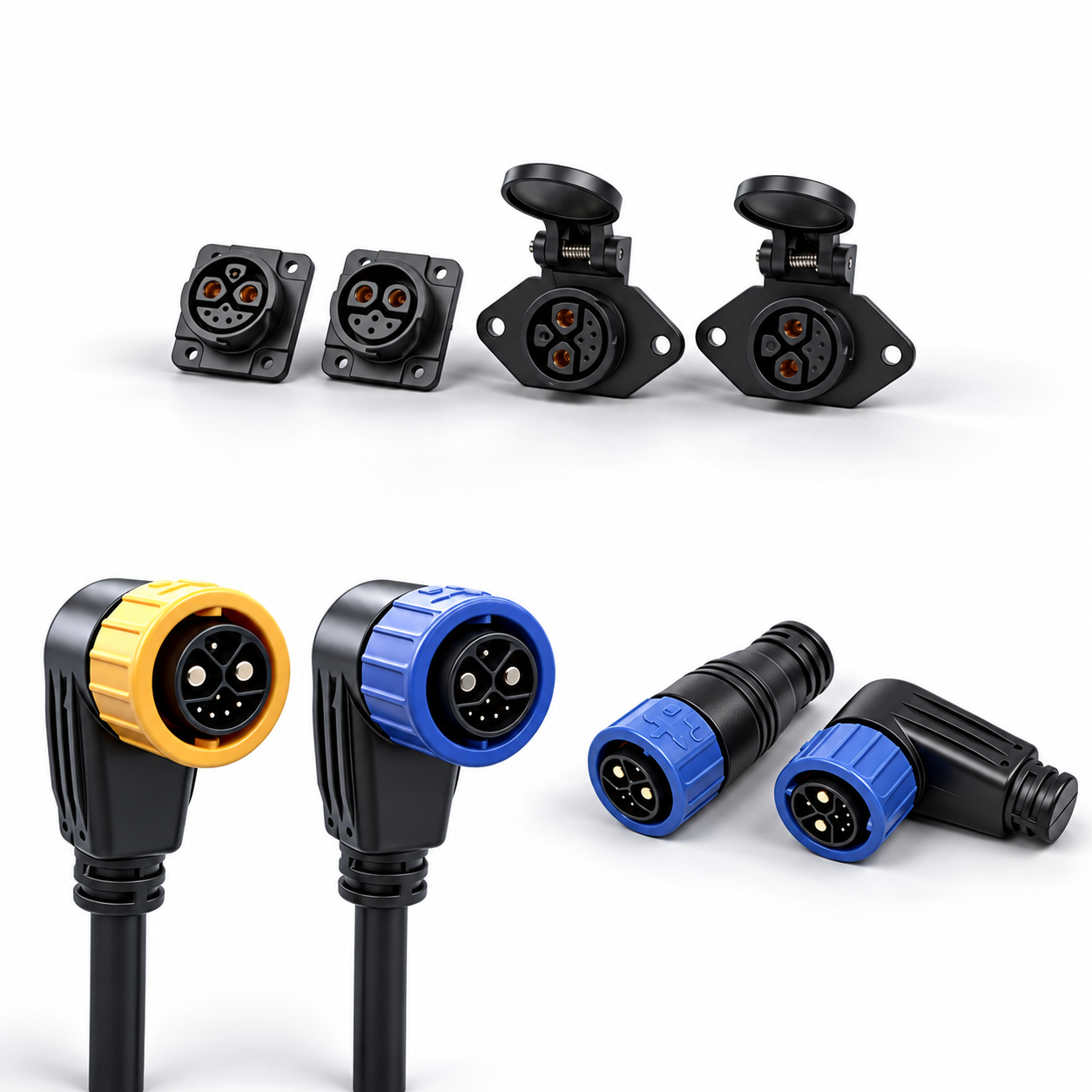
Why Connector Selection Matters
A connector is a critical point in the power path. Excessive contact resistance can create heat, voltage drop and energy loss. Poor sealing may allow moisture or dust to enter. An unsuitable locking method can lead to accidental disconnection, while a connector not designed for repeated mating may wear quickly in a battery swap station.
For a dependable system, the connector, cable, terminal, housing and installation method should be considered as one assembly.
1. Confirm Rated Current and Peak Current
Start with both the continuous operating current and the short-duration peak current. A connector rated for the nominal load may still overheat during charging peaks or rapid battery exchange cycles. Temperature rise depends on contact resistance, conductor cross-section, ambient temperature, ventilation and duty cycle.
- Specify continuous and peak current.
- Confirm the duration and frequency of peak loads.
- Match the cable size to the actual current and temperature conditions.
- Allow suitable design margin instead of operating continuously at the limit.
2. Check Voltage and Electrical Safety
The connector voltage rating must exceed the maximum system voltage, including possible transients. Creepage distance, clearance, insulation material and pin arrangement all contribute to electrical safety. High-voltage power contacts should be separated appropriately from low-voltage communication contacts.
3. Decide Whether Power and Signal Should Be Integrated
Many energy storage and battery swap applications require power, protective earth and signal transmission in one interface. Hybrid connector layouts can reduce the number of connection points and simplify installation. Signal contacts may support temperature sensing, interlock circuits, battery management communication or equipment status.
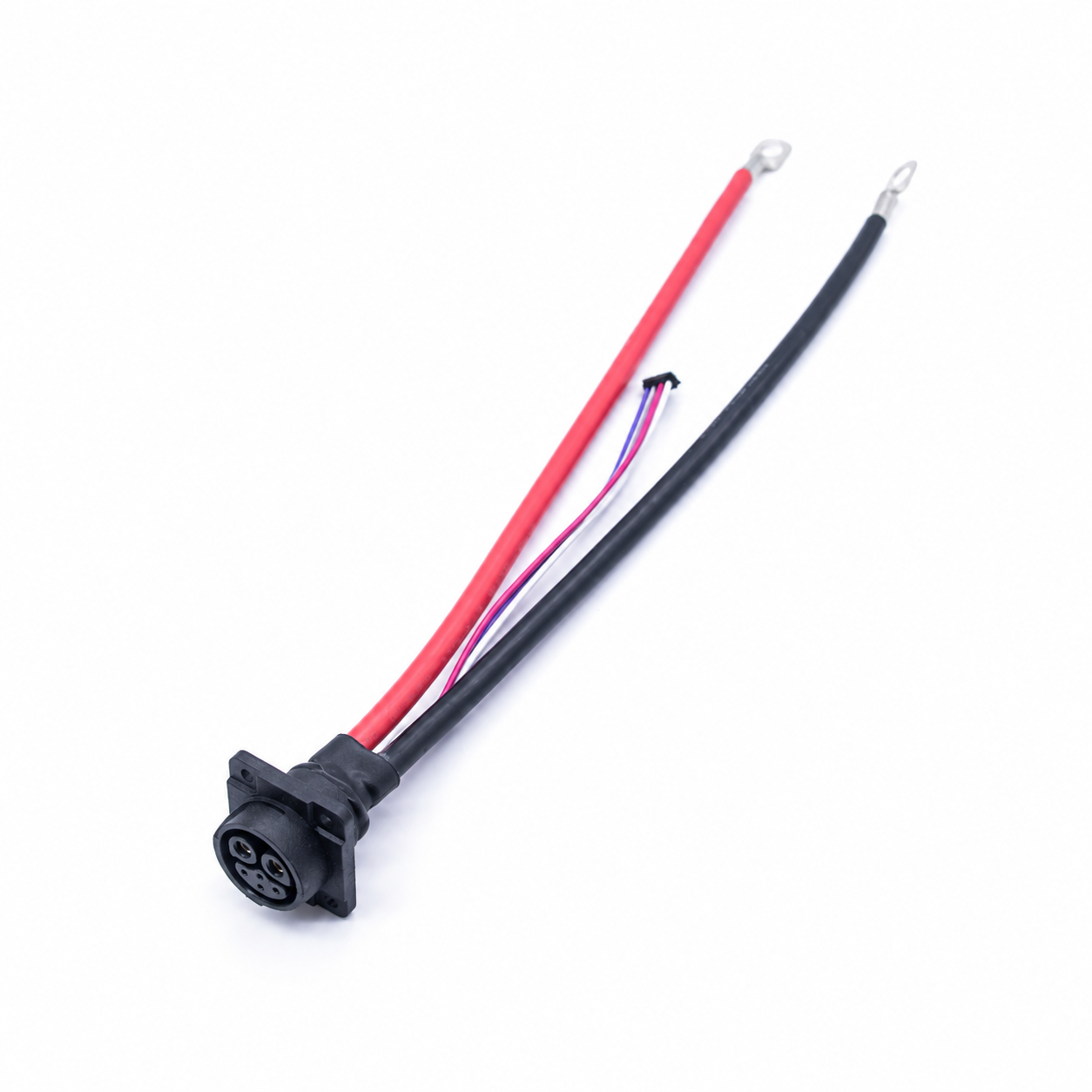
When selecting a hybrid design, define the number of power, ground and signal contacts, as well as the current carried by every circuit. Keying or coding can also help prevent incorrect mating.
4. Evaluate Mating Cycles and Locking Method
Battery swap equipment can require far more connection cycles than a fixed cabinet. Contact materials, plating, alignment and mechanical guidance therefore become important. The locking method should be secure while remaining practical for the operator or automated mechanism.
For automated equipment, consider tolerance to misalignment, blind mating, insertion force and the ability to replace worn components. For manual systems, consider touch safety, clear orientation and an intuitive locking action.
5. Select the Right IP Rating and Environmental Protection
Outdoor cabinets, mobile equipment and swap stations may be exposed to dust, rain, humidity, vibration and temperature changes. An IP-rated connector can help protect the interface, but the stated protection level normally depends on correct mating, suitable seals and proper cable termination.
- Define whether protection is required when mated, unmated or both.
- Check resistance to vibration and mechanical shock.
- Confirm operating temperature and material compatibility.
- Consider salt spray, UV exposure, oils or cleaning agents when relevant.
6. Design the Cable Assembly Together With the Connector
A reliable connector can still fail when paired with an unsuitable cable or termination process. Cable conductor size, jacket diameter, flexibility, shielding and bend radius should match the application. Crimping, soldering, overmolding and strain relief each have different production and maintenance implications.
Pre-assembled and tested cable harnesses can reduce installation time and improve consistency. Where electromagnetic interference is a concern, shielding and grounding should be planned across the complete assembly rather than only at the connector.
7. Consider Panel Mounting and Available Space
Before finalizing a connector, review the panel cutout, wall thickness, mounting direction, wrench clearance and rear cable space. Right-angle, panel-mount and inline versions may solve different packaging constraints. Service access is equally important: technicians should be able to disconnect and replace the assembly without dismantling unrelated equipment.
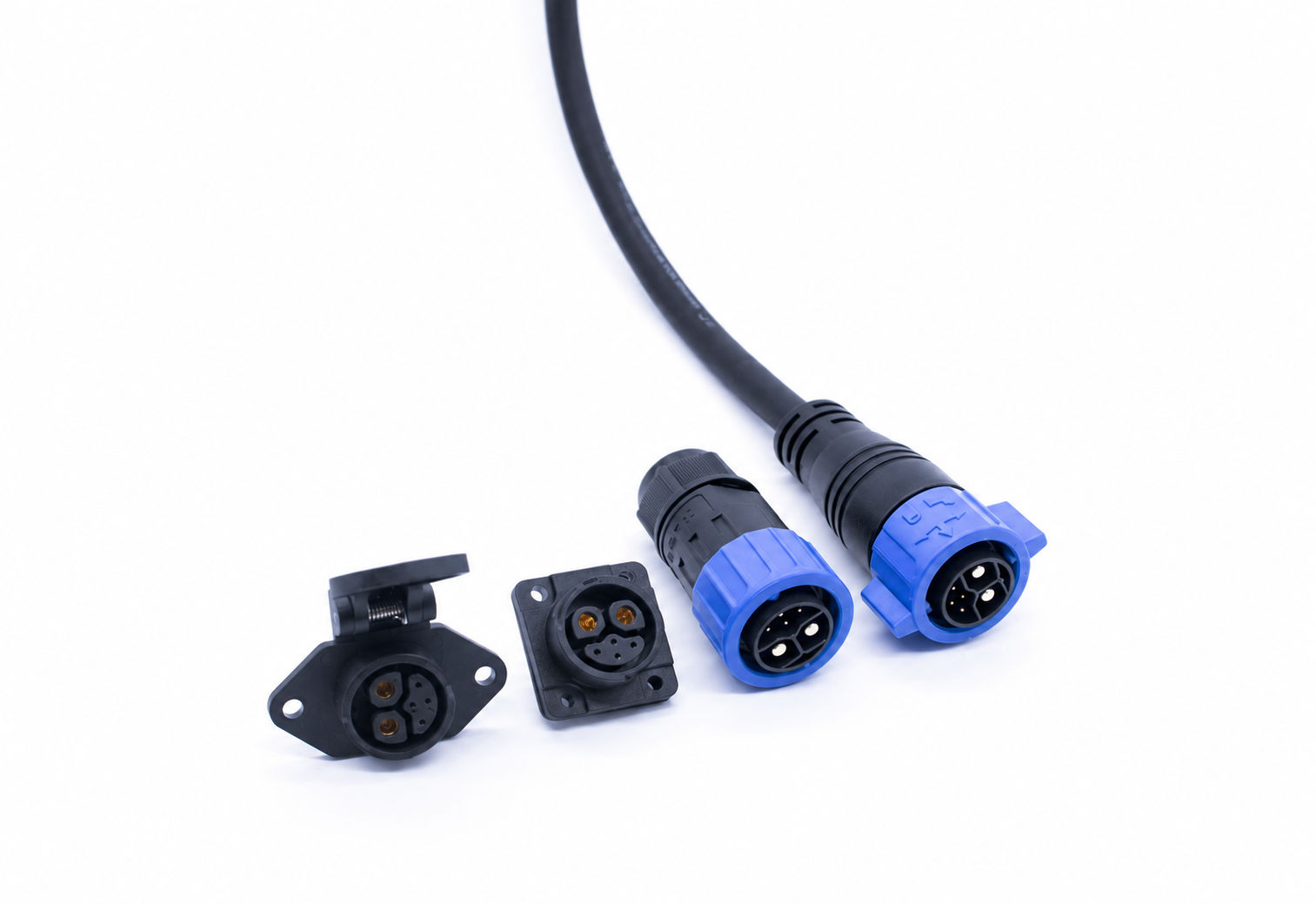
Information to Send Your Connector Supplier
To receive an accurate recommendation, provide the application type, maximum voltage, continuous and peak current, cable specification, required contact layout, mating cycle target, IP rating, operating temperature, installation drawing and expected annual quantity. Photos or a simple mechanical sketch can prevent misunderstanding and shorten development time.
Custom Connector and Cable Assembly Solutions
CONNIXTECH supports connector and cable assembly development for energy storage, battery swap, EV, AGV and other industrial applications. With more than 14 years of connector manufacturing experience, a 12,000-square-meter facility and an engineering team of over 20 professionals, we can help customers evaluate electrical, mechanical and environmental requirements and develop a practical connection solution.
Explore our energy storage and battery swap connectors, review our EV battery connector solutions, or browse more options in our product catalog.
Conclusion
The best connector is the one that fits the complete system. By defining current, voltage, contact layout, mating cycles, sealing, cable construction and installation constraints at the beginning, you can reduce heat, downtime and maintenance risk over the product lifetime.
Need help selecting a connector? Send CONNIXTECH your specifications for a recommended connector and cable assembly solution.